




Skip to content

Decentralized residential ventilation

The legitimate goal of saving more and more energy is leading to building envelopes becoming increasingly airtight. As a result, the natural air exchange that once occurred through gaps in the building is now almost completely prevented. A great deal of energy is lost due to the need for additional ventilation.

Decentralized residential ventilation with heat recovery can help solve this problem. We’ll show you how centralized and decentralized residential ventilation differ, why decentralized ventilation is important, and everything you need to know about operating a ventilation system.

What are the benefits of decentralized residential ventilation?

Anyone researching the ventilation market will quickly discover that there are different types of mechanical ventilation. In addition to the well-known central ventilation systems, decentralized systems have been growing in popularity for years. But what exactly is the difference? And when is it actually worth installing a decentralized ventilation system?
Ventilation systems for controlled residential ventilation differ, among other things, based on their function within the building—namely, central and decentralized ventilation. While central residential ventilation is typically installed for large living spaces, decentralized ventilation can be installed individually in each room and functions both within a single room and across multiple rooms.

Installation and setup of a decentralized ventilation system

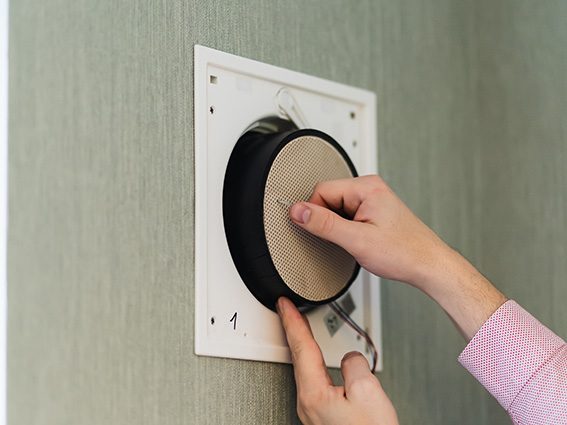
Decentralized ventilation systems for residential spaces are installed in exterior walls and are designed so that the ventilation units are distributed in pairs across different locations within a residential unit. The first step in installing a decentralized ventilation system is to plan and calculate the required air volumes. Learn how to install decentralized ventilation units in our guide.

When is a decentralized ventilation system a good choice?

A decentralized ventilation system is always a good choice if you want to ventilate specific rooms in your home using a technical system. This allows you to customize the indoor climate, heating, and overall comfort to your specific needs. In addition, the initial costs are significantly lower compared to centralized ventilation systems. Decentralized ventilation systems offer many other benefits, which are summarized in our guide.

Wall vents vs. ventilation with heat recovery

After cooking or bathing, it’s important to ventilate the kitchen and bathroom properly, but in practice—especially in interior rooms—this isn’t always easy to achieve. Without regular air exchange, moisture can build up and eventually lead to mold, which poses a risk to both health and the building’s structure. Find out which ventilation solution makes sense here and how outdoor air inlets compare to other systems in the following guide.

When is a ventilation plan needed?

Developments in recent years have led to increasingly airtight building envelopes (facades, windows, roofs) in new construction and after renovations. The clear goal here is to minimize heat loss as much as possible. At the same time, however, air exchange is essential to prevent excessive indoor humidity and the associated risk of mold growth. A suitable ventilation concept is therefore essential for optimal ventilation. You can read about exactly what a ventilation concept entails in our guide.

Cleaning a decentralized ventilation system

A decentralized ventilation system continuously ensures the right room climate. Regular cleaning and care are required to ensure the full functionality of the system over the long term. Find out why cleaning the ventilation system is important and how to do it correctly in just a few minutes.

Costs of a decentralized ventilation system

With building envelopes becoming increasingly airtight, multi-pane windows, and heavily insulated roofs, natural ventilation is virtually nonexistent. The result: rapid mold growth and persistent air pollution threaten residents’ health and damage the building structure. But what exactly does the homeowner get in return for the investment in a decentralized residential ventilation system? You’ll find the answer in our guide.

Retrofit a decentralized ventilation system

Retrofitting a controlled residential ventilation system is a worthwhile investment and, in some cases, required by law. If the natural airflow in the home is insufficient according to DIN 1946-6, homeowners are required to install a ventilation system.
Unlike central ventilation systems, retrofitting a decentralized residential ventilation system requires significantly less effort. All that is needed is to drill a core hole. How much work the core drilling actually entails depends on the nature and thickness of the wall.

dezentrale leuftung nachruesten

Basement ventilation

In areas in contact with the ground, there are also no gaps or cracks to allow for natural air circulation, and air exchange through windows is limited because they are either smaller and lower or nonexistent. In this case, basements require a separate ventilation system to supply fresh air.

We’ll explain what you need to keep in mind when it comes to basement ventilation.

Frequently Asked Questions About Decentralized Ventilation

In which rooms is a decentralized ventilation system useful?
As a ventilation system for individual rooms, decentralized ventilation systems can be installed in both supply air rooms and exhaust air rooms. In this context, supply air rooms refer to living rooms, bedrooms, and children’s rooms, while exhaust air rooms typically include spaces such as the kitchen, bathroom, or toilet.

Who installs a decentralized ventilation system?
In principle, you don’t necessarily have to hire professionals for the installation. With a good understanding of DIY and some skill, you can install a decentralized ventilation system yourself. You should only leave the electrical connection to a professional. If you need assistance with the installation, we’re happy to help.

How many decentralized ventilators are needed?
Decentralized ventilation units are installed in pairs in the exterior walls. Various rooms form so-called ventilation zones and typically contain one to two units per room. You can choose the installation location flexibly.

Need more information about decentralized ventilation systems?

Please let us know if you have any general questions about decentralized ventilation systems or would like a consultation.


    Schnellkontakt
    close slider

      Welcome to inVENTer

      Your ventilation expert will contact you as soon as possible!


      Mo – Thu: 07:00 – 16:30 Uhr
      Fr: 07:00 – 15:00 Uhr